A Recipe for Magic Potion – Out Now!

But not a witch in sight.

A long time ago, back in the hazy lockdown days of 2021, I had an idea for a picture book. I was thinking about the childhood days I’d spent making mud pies and dirt cakes, and how funny it would be to do a self-serious recipe book explaining how to make all of the (completely inedible) treats I’d made in our kindergarten kitchen, or in the backyard at home with my little sister. But, as is always the way with a great new idea, I decided to Google the concept, to make sure that no-one else had written it first.

And they had. Mud Pies and Other Recipes is a charming little book written by Marjorie Winslow, first published 30 years before I was even born. Even today, it’s still really funny and well-written. So Marjorie had beaten me to the punch. The idea was kaput.

Except, I kept thinking about it. When I remembered my own childhood again, I realised I hadn’t actually made that many mud pies. The main thing I liked making was potions — magic potions. And even though the picture book I wanted to write wasn’t a fantasy… wouldn’t it be interesting if I could make a little bit of that childhood magic actually feel real?

A Recipe for Magic Potion is that idea come to fruition, and I’m proud to say that it’s my brand new (and debut) picture book. When I pitched it to my publisher, I described it as “the least ironic thing I’ve ever written,” and I think that holds true — all of the books I’ve written so far are special to me in their own way, but this is the only one where the text makes my chest flutter a little bit every time I read it.

The really strange thing about the book is that it kind of wrote itself. At some point in 2021 I created a Word document for the project, and then months later I opened up that doc again, ready to get to work — only to discover that I’d already written 90% of the text on some other night. Being an author is always a strange job (especially in those dark pandemic years where I did all my writing in the middle of the night) but discovering an almost-complete manuscript that I had no memory of writing was certainly one the strangest moments I’ve had so far.

Wonderfully, the project was ultimately illustrated by Natasja Horne, who is an absolute master of mosses and mushrooms and murky green forests. Much like my work with Chris Kennett, I was astonished that the “rough” page designs Natasja was sending in were not in fact the final illustrations — and then was still amazed when the finals were filled with more luscious colours and hidden insects than I ever could have imagined. There’s a scene in the book where the children are surrounded by flowers (see the third pic in Natasja’s post above) that is just so beautiful, it makes me want to head out on a new adventure every time I see it. Natasja well and truly knocked this project out of (or into) the (overgrown) park.

Which is all to say: A Recipe for Magic Potion was released on April 3 in Australia, which means you can get your hands on a copy right this minute. Buy it for the children in your life who need a reminder that screen time isn’t everything, or the kids who love adventures so much that they’d like one before bed as well. And, be sure to savour that little dose of actual real magic at the end — I hope it hits home for you like it still does for me.

That’s all for now. Happy brewing!

Witch No. 16: Smelly Chantelly

“I smell a whiff of what I need to make my broomstick fly at speed…”

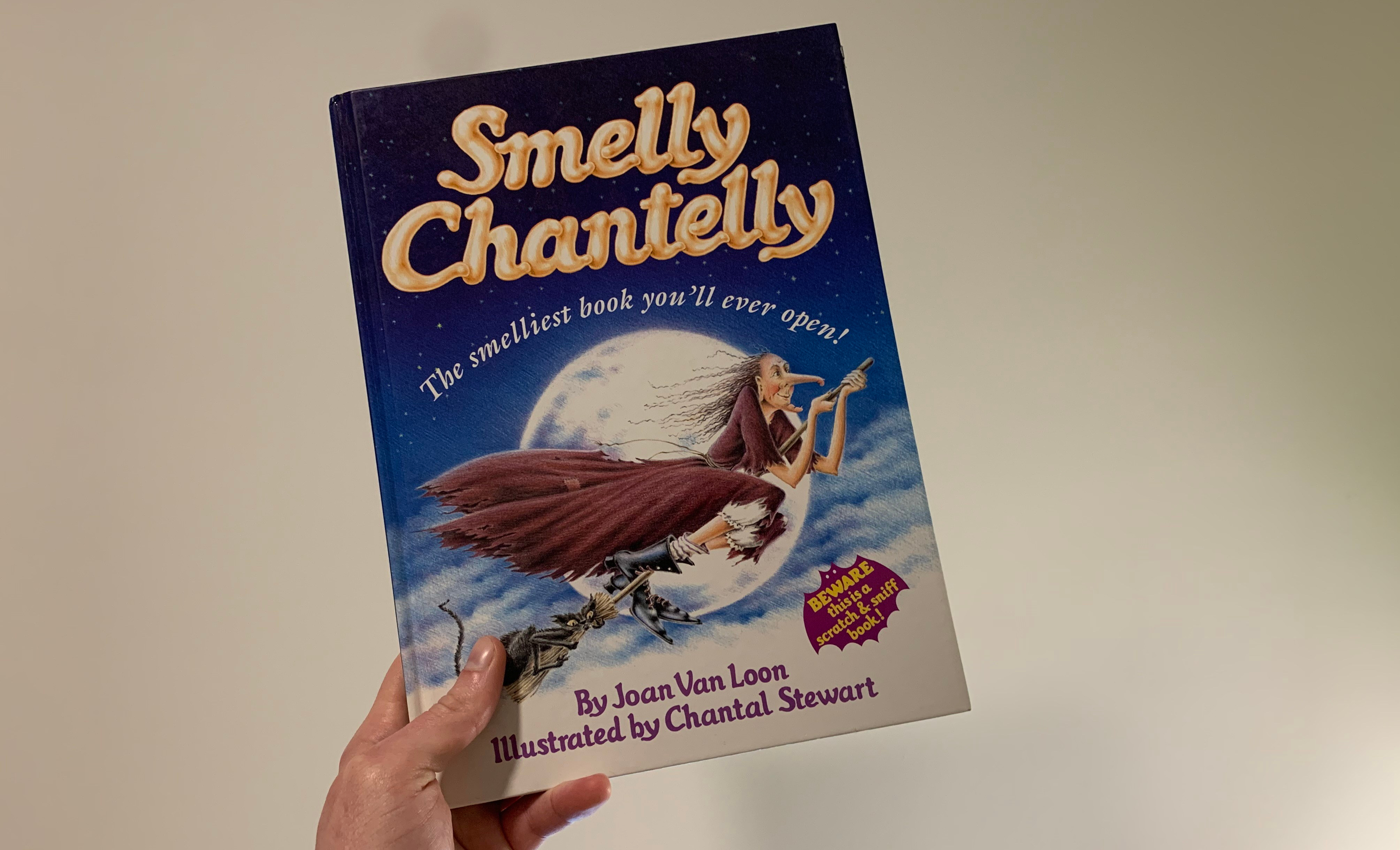
Smelly Chantelly isn’t the most famous of witchy books. My dad bought it for me at my kindergarten book fair, way back in 1996; even then, I was intrigued (and frightened) by the witch on the cover. However, more than twenty years later, Smelly Chantelly remains one of the weirdest picture books I have ever read. The illustrations are hideous. The main character is a slob.

And, to avoid burying the lead any longer: the book literally stinks. Smelly Chantelly is a scratch-and-sniff adventure, and Smelly’s foraged ingredients are pungently apparent on every page.

Smelly cover

The plot of the story goes thus. On the night before the witches’ fancy-dress ball, Smelly’s broomstick runs out of power, sending her tumbling through the roof of an old barn. As she makes her way home on foot, Smelly must find all of the ingredients required to brew a broomstick-restoring spell. (She’d also quite like to win the prize for Best-Dressed Witch, but that’s a secondary concern to getting her broom back in the air.) The child reader is implicitly invited to quest along with her, trying to identify which ingredient Smelly will add to her belt next.

It’s quite fun, really. All of the ingredients Smelly needs can be scratched and sniffed, and if you don’t spot the ingredient straight away, you can try scratching anywhere on the page. My copy from kindergarten has optimistic scratch marks on just about everything.

The only problem is that some of the ingredients smell truly, genuinely awful.

Smelly potion

On the fourth page of the book, the reader is told that Smelly’s breath reeks of mildew; the reader is invited to scratch and sniff. Later, Smelly trades her cat for a clove of garlic; the reader is again invited to scratch and sniff. At the end of the book, Smelly realises that the final ingredient she needs is her own smelly sock; the reader is again invited to scratch and sniff. All of these invitations should absolutely be turned down.

My biggest regret about Smelly Chantelly is that my favourite smell in the book (the bubblegum) was immediately preceded by my least favourite smell (the garlic). The bubblegum smelled great, but the order of scratching meant that the bubblegum very quickly became contaminated with the awful stink that came before. I don’t know who edited that aspect of the book, but my five-year-old self would like to give them a very stern talking to.

Smelly garlic

And yet I still have really fond memories of Smelly Chantelly. Unpleasant as it could be, the concept of a stench-filled picture book remains delightfully transgressive, and the nightmarish proportions of the character designs further elevate that weirdness. (Smelly’s nose really has to be seen to be believed.) Furthermore, it’s a book from Melbourne, so chalk up another Australian witch in the records!

For the sake of completion, I’m going to finish this report by scratching the garlic again, which I haven’t done in approximately twenty years. I don’t want to do it. I’m really, really hoping the scent has faded.

Nope. Still there. Still terrible. Huge regrets.

Smelly nose

Final Musings

— What? You’re saying it’s been two and a half years since my last witch post? Stop yanking my chain. I’m quite certain that this website is regularly maintained and updated.

— A begrudging thanks to author Joan Van Loon and illustrator Chantal Stewart for the fun times spent reading this book, but no thanks to them at all for the times spent frantically scrubbing my garlic-stained fingertips before bed.

— This is a tenuous connection, but The Witching Hours 6 is Anna and Max’s smelliest adventure of all. I’m sorry that book six hasn’t been released yet, but the way this year is flying by, I’m sure it’ll be out before we know it!

Happy witching!

Witches 23

Witch No. 14: Daisy O’Grady

“Does she wear a long black dress? Guess!”

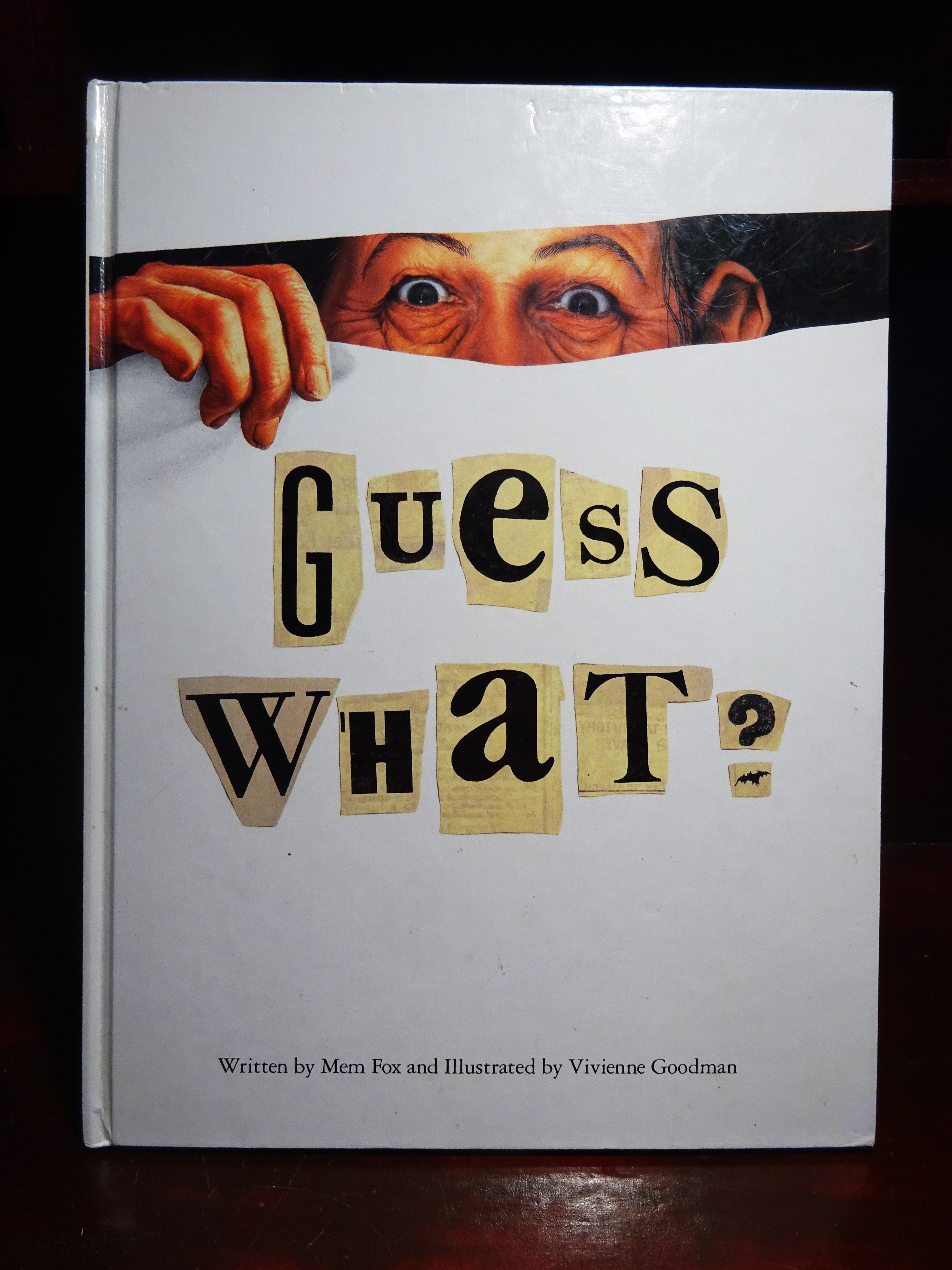
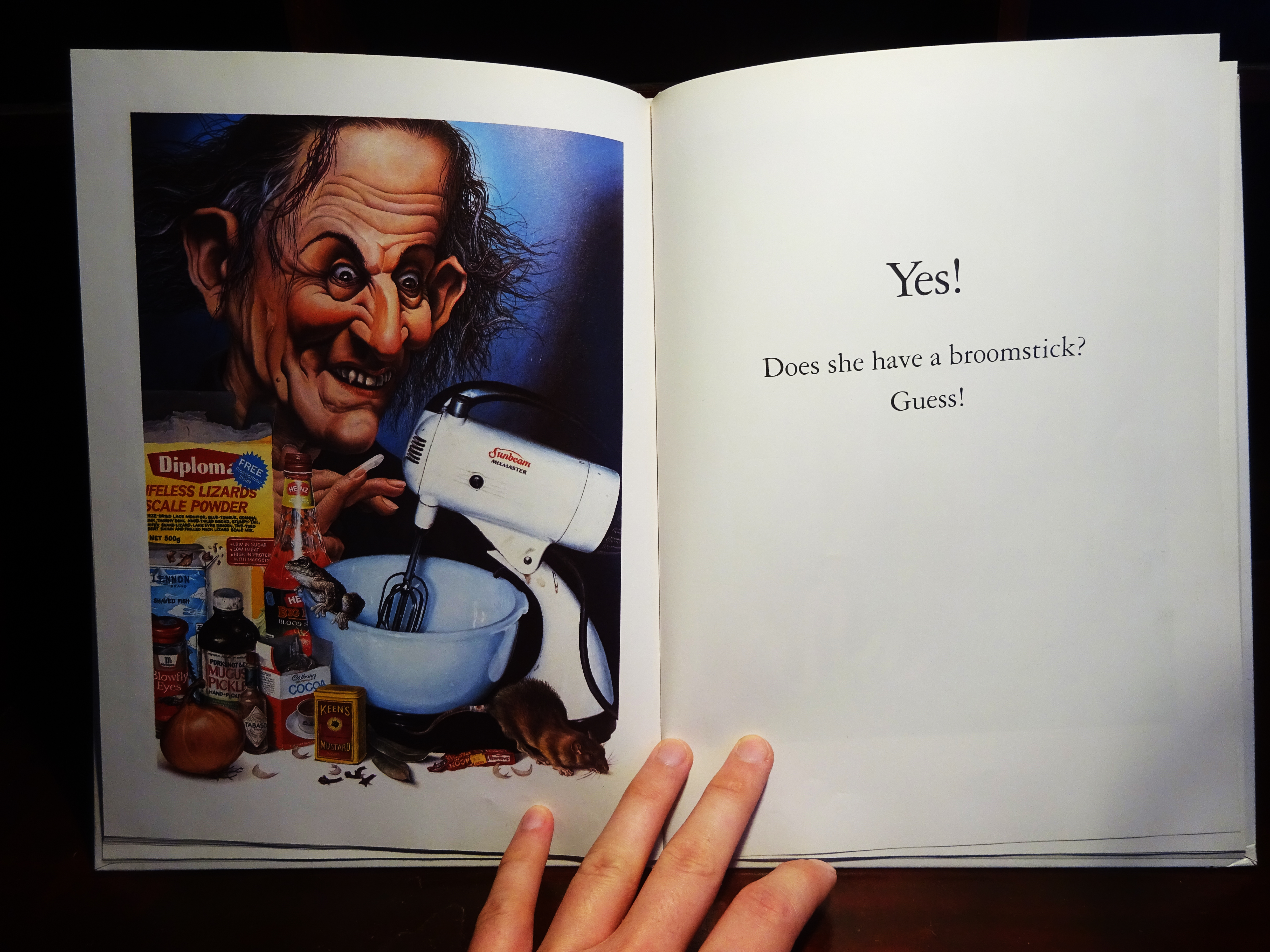
As an Australian writer fascinated by all things witchy, I’m always on the lookout for witches with a distinctly Australian flair. Unfortunately, throughout my reading life so far, such witches have been virtually non-existent – with one notable exception. Daisy O’Grady is a terrifying Australian sorceress, her face gaunt, her hair wild, with a literal skeleton tucked away in her closet. She wears a macabre fox stole around her neck, and proudly mixes potions containing rats’ tails, toe-nails and dead lizards’ scales.

Oh – and she also happens to be the main character in a picture book for children.

DSC01225

Guess What? is a 1988 picture book written by Mem Fox and illustrated by Vivienne Goodman. It’s a book that sets you up to feel uneasy from the very beginning, establishing a fleeting sense of distance (“Far away from here lives a crazy lady called Daisy O’Grady”) before slowly drawing the reader closer to its mysterious protagonist. Each of the simple, sinister questions asked by Fox (“Is she tall?” “Is she thin?”) gives a further clue to Daisy O’Grady’s identity, building and building until the conclusion of the story seems terrifyingly, unsettlingly inevitable. You hope that Daisy won’t be a witch. You hope there’s going to be a twist. You hope the book won’t give you nightmares.

And, well, there is a twist – but I’m certainly not going to ruin that here!

DSC01226

Fox’s prose is a masterclass in creating a sense of looming dread, but it’s Vivienne Goodman’s illustrations that give the book its distinctly Australian flavour. Through a series of vivid, almost photorealistic pictures, Goodman provides a detailed insight into Daisy O’Grady’s world, documenting everything from her modest scrubland shack (complete with corrugated iron roof and brick outhouse) to the native animals that live both inside and outside her abode. Every illustration is cluttered with incredible, recognisable detail: The Weekend Australian lying crumpled on the floor; a reconciliation badge pinned to Daisy’s black hat; an ordinary tin of Keen’s Mustard sitting beside a jar of blowfly eyes. It’s a perfect snapshot of Australian farm life, filtered through a weird, witchy gauze. I’ve spoken earlier in this blog about my love for witch products in The Jolly Postman, and Goodman’s own creations – “Lifeless Lizards Scale Powder,” “Heinz Big Red Blood Sauce” – form a lovely complement to that text.

DSC01228

I’ve always thought of Guess What? as being an edgy, enthralling picture book, and so I was recently fascinated (if not surprised) to learn that, in American libraries, the book was the 66th most challenged book of the 1990s. According to one library website I found, the book was most likely challenged because of its “age-appropriateness and offensive language” – and while age-appropriateness is too subjective to easily refute, I am truly baffled by the second accusation. Does the charge relate to Daisy O’Grady’s wicked collection of 1970s pin badges, which includes buttons that say Sex Pistols and ABBA is Dead? Possibly – but it’s hard to shake the feeling that certain parents were looking for any excuse to object to the book once they found out there was a witch lurking inside.

But don’t let those “offensive” badges put you off – Guess What? is a magnificent picture book, perfectly designed to spook a child even as it delights them. The world needs more witches like Daisy O’Grady: cursing, cackling and cranky while remaining entirely, wonderfully Australian.


Final Musings

— I first had Guess What? read to me when I was one year old. I know this because my copy of the book is signed to me by Mem Fox, with an inscription dated 1992. My witch lit credentials are super legit.

— Mem Fox is notable for having written many, many famous picture books, but my other favourite book of hers is Possum Magic, from 1983. There isn’t a lot of magic in Australian literature, but with these two picture books Fox sets out a vision of a mythic Australia that was hugely influential on me as a young reader. (I even had a pet brush-tailed possum called Hush, rescued from the forest beside our house.)

— From all reports, the best reading of Guess What? you’ll ever hear is by Mem Fox herself. I can’t find a video of her performance anywhere on the web, but my mum recalls that a great, urgent emphasis must be placed on the constant refrain of “Guess? Yes!” In lieu of a video, you can read about how Fox developed the book on her website.

That’s all for now – happy witching!

Witches 18